
Unique Wedding Seating Chart Ideas: Make Your Seating Chart Part of the Décor
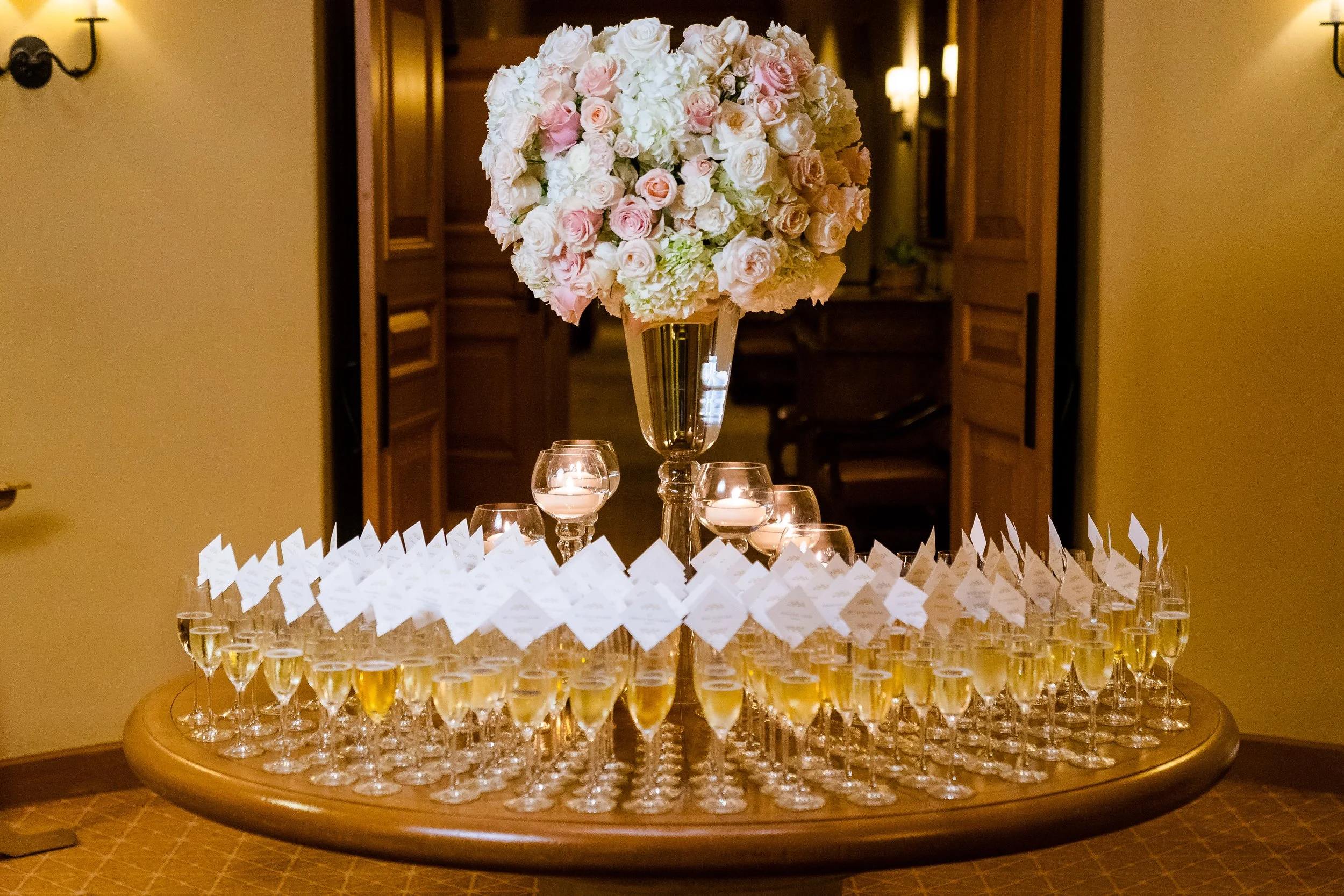
When couples think about their wedding seating chart, they often picture a large sign with a list of names and table numbers. While there is absolutely nothing wrong with a classic seating chart, I always encourage my couples to think of this as another opportunity to bring their personality and wedding design to life.
Your seating chart is one of the first things guests interact with as they transition from cocktail hour to dinner. It needs to be beautiful, easy to read, and easy to navigate — but that doesn't mean it has to be boring!
As a wedding planner, I love seeing couples take this traditionally functional detail and turn it into a memorable design moment.
1. Make a Statement with a Mirror
A beautifully framed mirror with hand-calligraphed names and table numbers can feel incredibly elegant and timeless.
For a formal wedding, consider a vintage gold frame. For a more contemporary celebration, a sleek modern frame or oversized minimalist mirror can create a completely different look.
Add florals or greenery around the edges, and your seating chart becomes part of the overall reception décor rather than simply a sign directing guests where to sit.
2. Use Acrylic for a Modern Look
Clear or colored acrylic is a wonderful option for couples who want something clean, contemporary, and sophisticated.
Acrylic panels can be displayed individually on an installation, arranged in a grid, or layered with florals and other design elements. They work particularly well for modern weddings, black-tie celebrations, and venues with beautiful architecture that you don't want to visually cover.
3. Turn Your Seating Chart into a Floral Installation
Who says a seating chart has to be flat?
One of my favorite ways to create a memorable display is to incorporate seating assignments into a floral or greenery installation. Names can be attached to individual flowers, branches, ribbons, or cards within the arrangement.
A lush floral wall, garden-inspired display, or asymmetrical floral installation can make a seating chart feel like a true piece of art.
4. Give Each Guest a Little Something
Your seating assignment doesn't necessarily have to be a piece of paper.
Think about incorporating the seating assignment into something guests can enjoy or take home. Depending on your wedding style, that could be:
A mini bottle or beverage
A personalized cookie
A small candle
A handmade ornament
A miniature bottle of olive oil
A beautiful luggage tag
A small potted plant or herb
A personalized favor
This is a particularly fun option because your seating chart can serve two purposes at once — helping guests find their tables while also becoming part of their wedding favor.
5. Incorporate Your Wedding Destination
If your wedding has a strong connection to a location, let that inspire the seating chart.
Getting married at the beach? Use seashells, vintage postcards, sailboats, or coastal-inspired details.
Planning a wine-country wedding? Consider wine bottles, corks, vintage vineyard illustrations, or individual wine-themed cards.
Having a destination wedding? Create a seating chart inspired by a map, boarding passes, postcards, or places that are meaningful to you as a couple.
Your seating chart can tell a little piece of your story before guests even sit down for dinner.
6. Name Your Tables Instead of Numbering Them
Table numbers are practical, but table names can be much more personal.
Instead of Tables 1–15, consider naming your tables after:
Places you've traveled together
Favorite restaurants
Cities you've lived in
Family traditions
Favorite songs
Movies
Flowers
Significant dates
Places from your love story
Just make sure the names are easy to distinguish so guests don't have to solve a puzzle to find their table!
7. Create a Seating Chart That Guests Can Interact With
For couples who want something playful, make finding their table part of the experience.
Guests might pull a card from a display, find their name hanging from a ribbon, select a personalized item, or even receive a welcome drink along with their seating assignment.
Interactive displays can be especially fun during cocktail hour because they give guests something to do while they're mingling.
8. Let Your Wedding Venue Inspire the Design
One of my favorite approaches as a planner is to design the seating chart so it feels like it belongs at the venue.
A historic estate might call for an antique window or ornate frame. A coastal venue could inspire a beachy installation. A modern hotel might be the perfect setting for acrylic, metal, or a dramatic monochromatic display.
Look around your venue and ask yourself: What materials, textures, architecture, or scenery already exist here that we could incorporate into the design?
The result will feel much more intentional than simply placing a generic seating chart at the entrance.
9. Make It a Photo-Worthy Moment
Your seating chart will naturally become a gathering point during cocktail hour, so don't be afraid to make it visually interesting.
Consider placing it somewhere with good lighting and enough room for guests to comfortably gather without creating a bottleneck. Add florals, candles, a beautiful backdrop, or another design element to make the area feel intentional.
And here's my planner's tip: Don't forget about the photographer. If your seating chart is an important design element, make sure it is somewhere your photographer can capture before guests begin interacting with it.
10. Don't Sacrifice Function for Beauty
This is the most important piece of advice I can give you.
Your seating chart can be incredibly creative, but guests should still be able to find their names quickly.
As a planner, I'm always looking at the guest experience. If 150 people are entering the reception area at approximately the same time, a beautiful but confusing seating chart can quickly become a traffic jam.
Keep these things in mind:
Make names easy to read.
Don't choose a beautiful script font that requires guests to stand inches away from the sign.
Organize names thoughtfully.
Alphabetical by last name is usually the easiest system for guests to navigate.
Make table numbers or names obvious.
Guests shouldn't have to decipher your design to figure out where they're sitting.
Give guests enough space.
Your display should accommodate people gathering, searching, and stepping away without blocking the entrance.
Have a backup.
Your planner or venue should have a complete seating list available in case a card gets misplaced or a last-minute seating change occurs.
Your Seating Chart Should Feel Like You
The best wedding seating charts aren't necessarily the biggest or most elaborate. They're the ones that feel connected to the couple, the venue, and the overall wedding design.
Whether you choose an elegant mirror, a floral installation, personalized favors, a destination-inspired display, or something completely unexpected, think of your seating chart as another opportunity to tell your story.
After all, even the practical details of your wedding can be beautiful.
As a wedding planner, I always tell my couples: your guests will experience your wedding through hundreds of little details. When those details are thoughtfully designed — and thoughtfully planned — they become part of what makes your celebration uniquely yours.